How can we understand Europe, its challenges and its future from a Christian perspective? This was the central question during the INCHE Europe Student Programme, held from 7–11 April 2025 in Biezenmortel, the Netherlands.
Students and staff from different European countries came together for a week of lectures, workshops, discussions, intercultural exchange and Christian reflection. The programme was organised as a Blended Intensive Programme (BIP) with the support of an Erasmus+ grant, enabling students and staff from participating European institutions to take part in this international learning experience.
The programme was organised by INCHE Europe in cooperation with Driestar Christian University for Teacher Education, CHE University of Applied Sciences, the Schuman Centre for European Studies, the Quo Vadis Institute and several INCHE Europe member institutions.
Exploring Europe from a Christian perspective
The programme began online on 20 February with a kick-off and virtual exchange. Students introduced themselves, explored the cultural and religious heritage of their countries and prepared for the intensive week through readings and assignments.
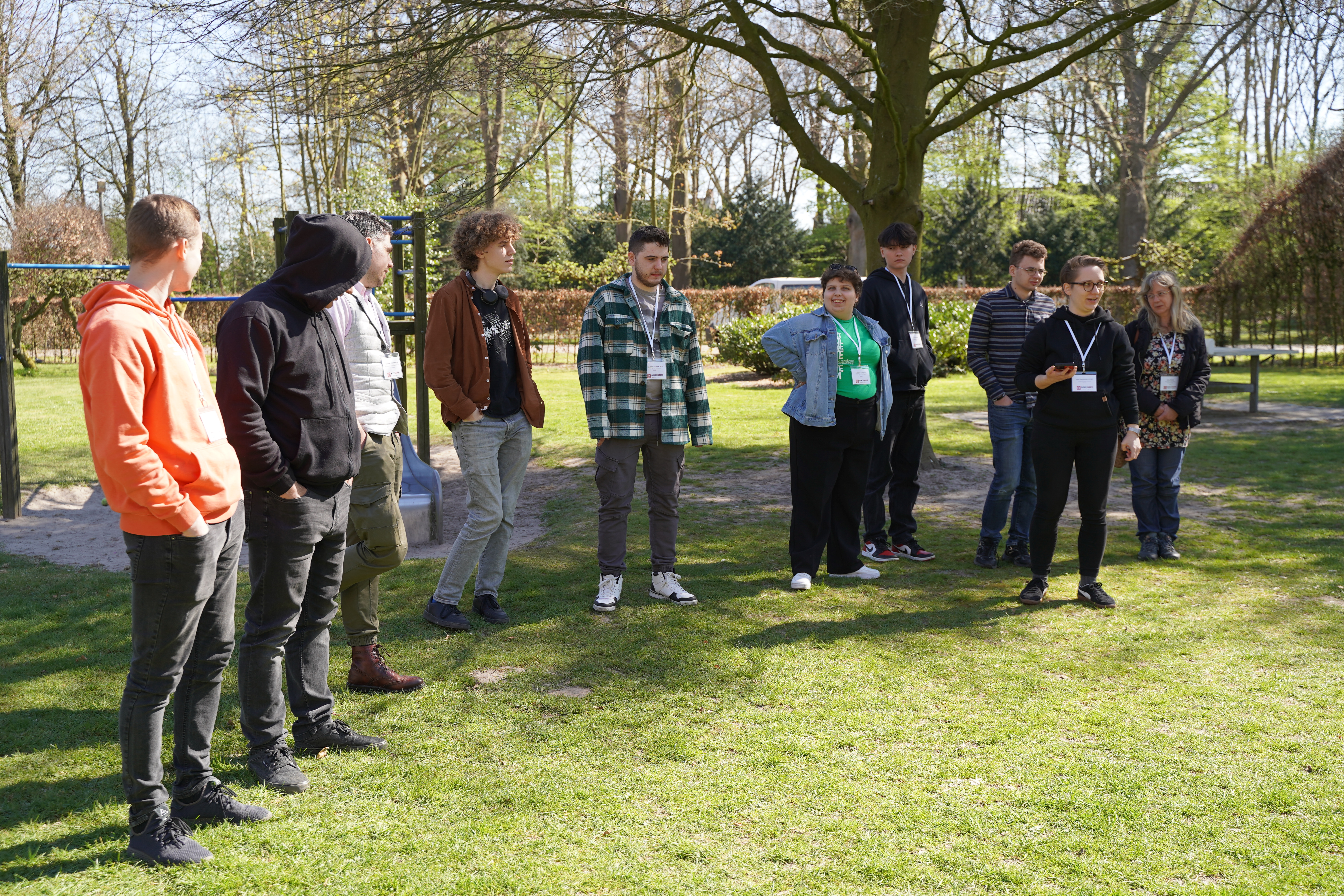
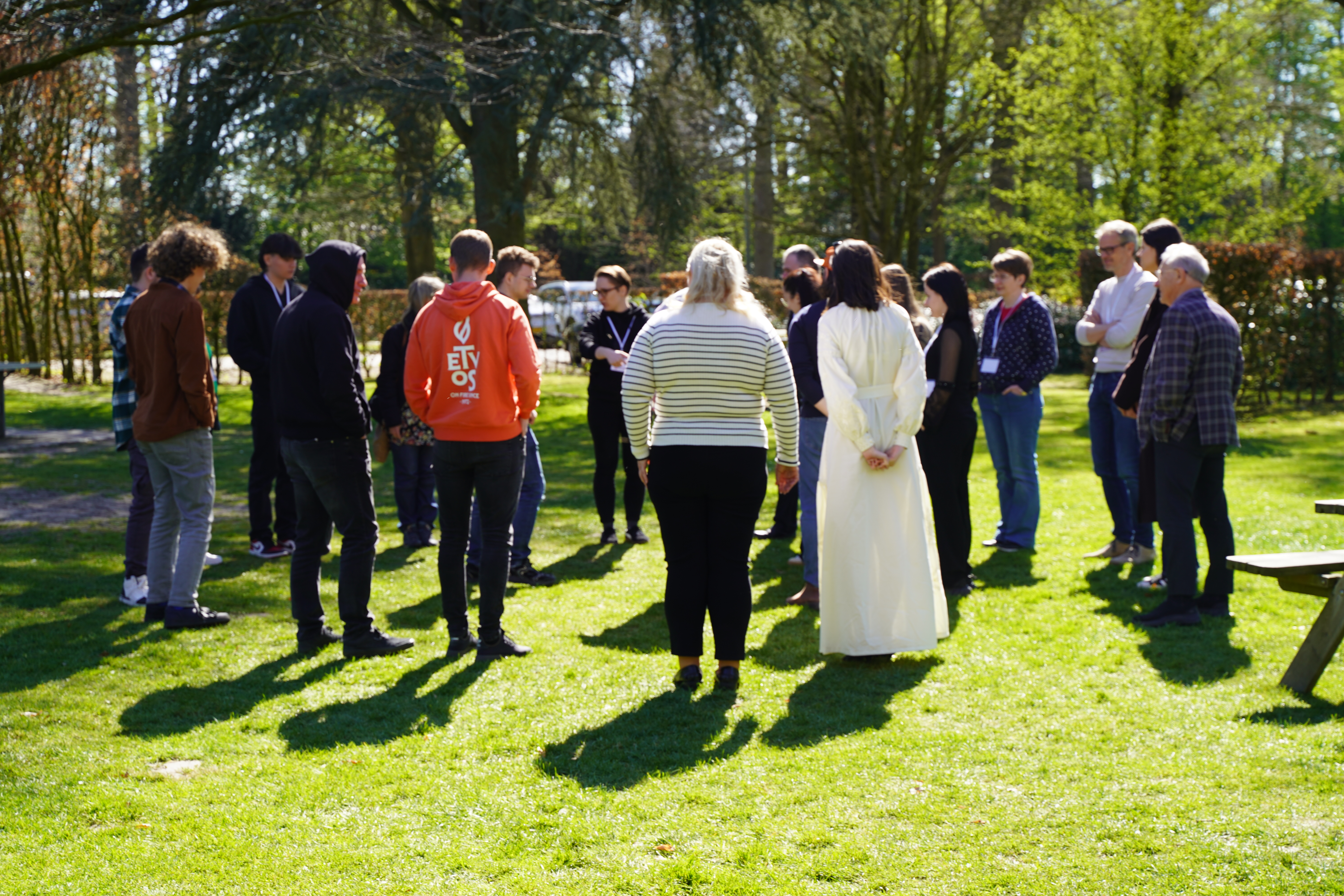
During the week in the Netherlands, students explored topics such as Christianity and European culture, European integration, human rights, church and state, European identity and citizenship. Lectures and workshops were led by academics and practitioners from different institutions and countries, giving students the opportunity to encounter a variety of perspectives.
Learning from different perspectives
One of the most valuable aspects of the programme was the international group of students. Participants came from different countries and brought different academic, cultural and religious backgrounds with them.
This diversity became particularly visible during the international group assignment. Students worked together on contemporary European challenges, including migration, support for Ukraine, the Green Deal, farmers' protests and European integration.
Working on these issues together was not always straightforward. Students discovered that people from different countries can have very different perspectives on the same European issue. By listening to one another, discussing different viewpoints and taking each other's national contexts into account, they learned how to work together and find common ground.
Becoming part of a wider international community
A special feature of the programme was its connection with the INCHE Global Conference, which took place at the same time. Students were able to participate in worship, keynote sessions, networking activities, conference dinners and other events alongside academics and educational leaders from the wider INCHE network.
They also had the opportunity to present the results of their group work to participants of the conference. This gave students an authentic international audience and allowed them to share their ideas with a much wider Christian higher education community.
More than studying abroad
The INCHE Europe Student Programme was about more than academic learning. Throughout the week, students were encouraged to reflect on their own perspectives, engage with different cultures and consider the role of faith in society and public life.
The combination of academic learning, Christian reflection and international encounters created opportunities for both personal and intercultural growth. Students developed their understanding of European developments while also learning how to engage constructively with people who have different experiences and opinions.
The programme also created new friendships, connections and opportunities for future cooperation between students and institutions across Europe.
Erasmus+ makes international learning possible
The programme was made possible in part through Erasmus+ funding. The Erasmus+ subsidy supported the participation of students and staff in the Blended Intensive Programme and contributed to making international learning and cooperation accessible across European institutions.
By combining physical mobility with online preparation and international collaboration, the BIP offered students a meaningful Erasmus+ experience that went beyond simply studying in another country.
Looking ahead
The positive experiences of the 2025 programme have provided a strong foundation for future editions of the INCHE Europe Student Programme. The organisers will continue to develop the programme, with more time for international group work and preparation to ensure that students with different backgrounds can participate confidently from the start.
The 2025 programme showed the value of bringing students from different European countries together to explore faith, society and Europe. Through learning from one another, engaging with challenging issues and building an international community, students discovered that European cooperation is not only about institutions and policies, but also about relationships, dialogue and a willingness to understand different perspectives.

This enriching experience was made possible through the support of Erasmus+, which enables international collaboration and professional development. Through this program, we were able to engage in meaningful exchanges, broaden our perspectives, and strengthen our commitment to high-quality, values-driven education. We are grateful for this opportunity and look forward to building on these international connections in the future!